Key takeaways
- Classify every required item as included, optional, customer-supplied or unresolved.
- Compare configured systems rather than bare stage prices.
- Keep compatibility and acceptance evidence beside the supply list.
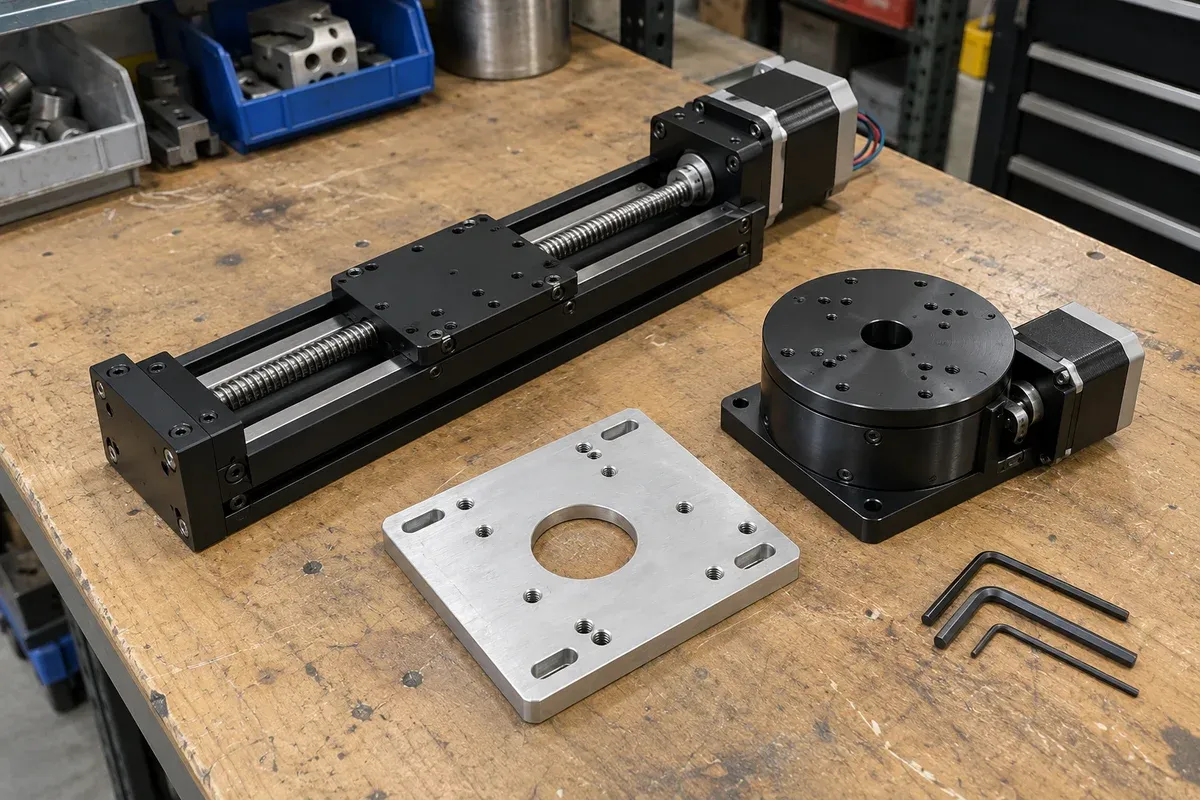
Define the system you are trying to buy
A stage quotation can describe anything from a mechanical assembly to a configured motion package. Before comparing offers, write the intended delivery boundary. Identify what the project expects to receive, what already exists and what the integrator will provide.
The model pages on this site include a supply-scope checklist because the catalogue does not define a complete shipping bundle. That distinction matters even when a motor appears in the model specification. A listed component and a confirmed item in the delivered package are not automatically the same thing.
Give every required item a status
Create one line for each required component and assign a clear status: included, optional, customer-supplied or unresolved. Add the quoted part number or description, quantity and revision where relevant. Preserve the supplier’s wording separately from your interpretation.
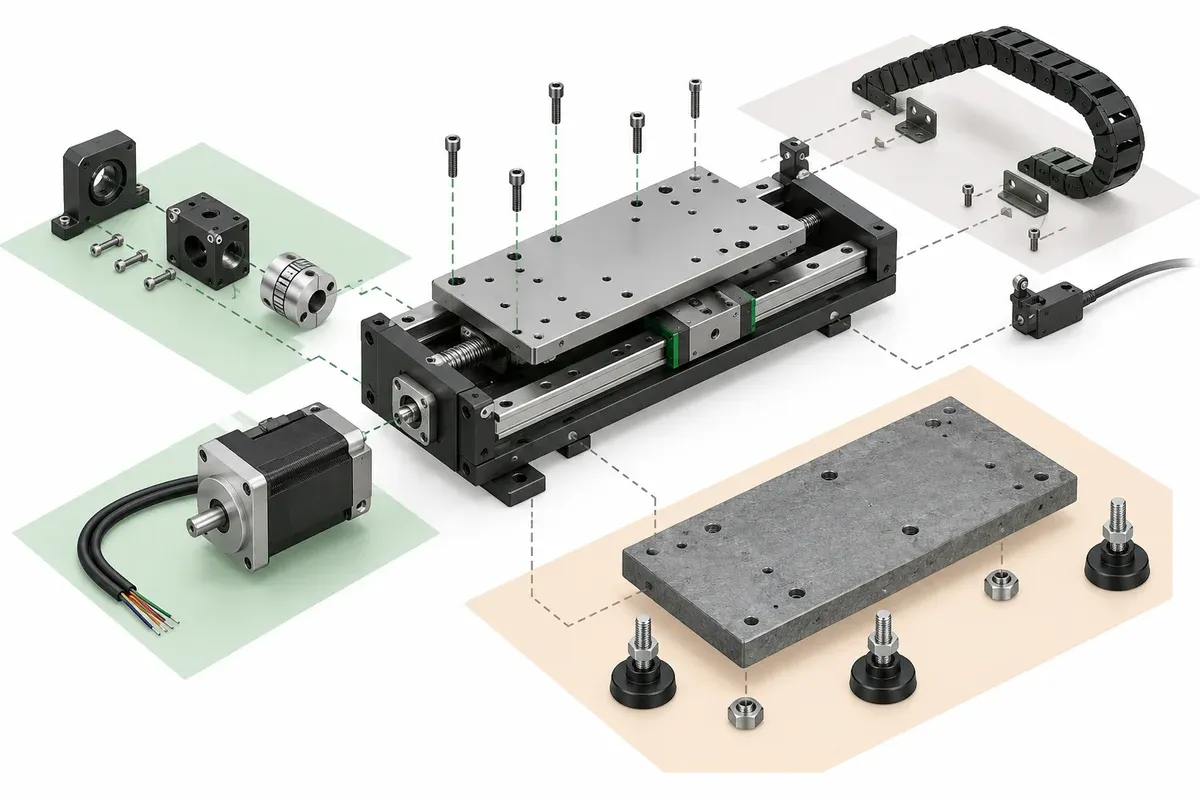
A useful hardware list includes the stage assembly, motor, drive or amplifier, controller, power supply, cable set, mounting adapters and fasteners. Add any sensor, interface hardware or other component required by the proposed configuration. Do not assume a photograph defines the bundle or that the absence of a price means an item is included.
For a hypothetical comparison, Offer A may name a stage and motor while Offer B names a stage, motor, controller and cables. A lower total on A cannot yet be interpreted as a lower cost for the same system. First identify the missing required items and who supplies them. The example illustrates scope normalization; it contains no actual supplier pricing.
Check interfaces between the listed components
An itemized list is necessary but not sufficient. Ask whether the named components form the supported configuration for the application. Confirm connector information, cable lengths, power requirements and the intended command interface through the relevant documentation.
If existing equipment will be reused, identify its exact model and revision. Request written compatibility confirmation for the proposed pairing. Do not infer compatibility from connector appearance, a common motor description or a similar product name.
Keep any adapter or configuration work visible. A cable may be supplied but still require a specific routing arrangement; a controller may be included but still leave host-software integration to the customer. Assign those responsibilities rather than letting the word included conceal unfinished work.
Put drawings and validation into the scope
Ask what dimensioned drawing and CAD format will be available for the exact supplied configuration. Confirm the revision before releasing the mounting design. A representative image is not a controlled interface drawing.
List the inspection or performance evidence expected with delivery. Distinguish a catalogue value, a configuration-specific statement and a requested acceptance test. The specification guide explains the site’s labels for catalogue, derived and unconfirmed information; a quote should not silently promote an unresolved value into a guarantee.
Describe the acceptance configuration, measurement location and process objective. If an application-specific test is an option, keep that option visible in the comparison and identify who performs it. Do not assume that a standard inspection record demonstrates the assembled fixture’s performance.
Compare commercial conditions without inventing certainty
Once scope is aligned, record the currency, applicable charges, delivery destination, schedule basis and validity period stated in each actual quotation. Keep unknown charges or unconfirmed dates visibly unresolved. This article supplies no prices, stock claims or delivery promises.
Separate recurring charges, software licenses or service commitments if they appear in an offer. Ask what is needed for initial operation and what remains optional. If the quotation changes, preserve the previous revision and note which scope or assumptions changed with it.
Use a readiness checklist before approving the purchase
The comparison is ready for a decision when the reviewer can answer:
- What exact hardware and documentation will arrive?
- Which required items are supplied elsewhere?
- Are the component interfaces and compatibility confirmed?
- Who owns mounting, configuration and host integration?
- What evidence supports acceptance of the intended task?
- Which costs, dates or conditions remain provisional?
Send unanswered scope questions through the quotation inquiry with the relevant model and drawing. Keep the final comparison together with the approved quotation revision. That record gives receiving, integration and purchasing teams the same definition of complete, and makes later substitutions or omissions easier to recognize before they become commissioning problems.
Questions
Does a motor listed in the catalogue mean a complete control system is included?
No. Confirm the delivered motor, drive, controller, power supply and cables explicitly in the quotation. Catalogue identification is not a complete shipping-bundle definition.
Should an unpriced required cable be treated as free?
No. Mark it unresolved until its supply responsibility and price are confirmed. A missing line is not evidence of inclusion.
Can two quotations be compared before every option is resolved?
They can be reviewed provisionally, but label the unresolved scope clearly. Do not present a final like-for-like total while required components or responsibilities remain unknown.
Sources & scope
Sources support the specific points described below. General engineering guidance and third-party examples do not establish a catalogue model's performance or suitability.
- Model supply-scope checklist
Separates catalogue-listed hardware from unconfirmed drive, controller, cabling, CAD and mounting supply; states that the catalogue is not a complete shipping-bundle definition.
Accessed - How to read the specifications
Definitions and the catalogue, derived and not-confirmed labels used on this site.
Accessed
Related engineering resources
Continue reading
Stage Selection & Buying Guides
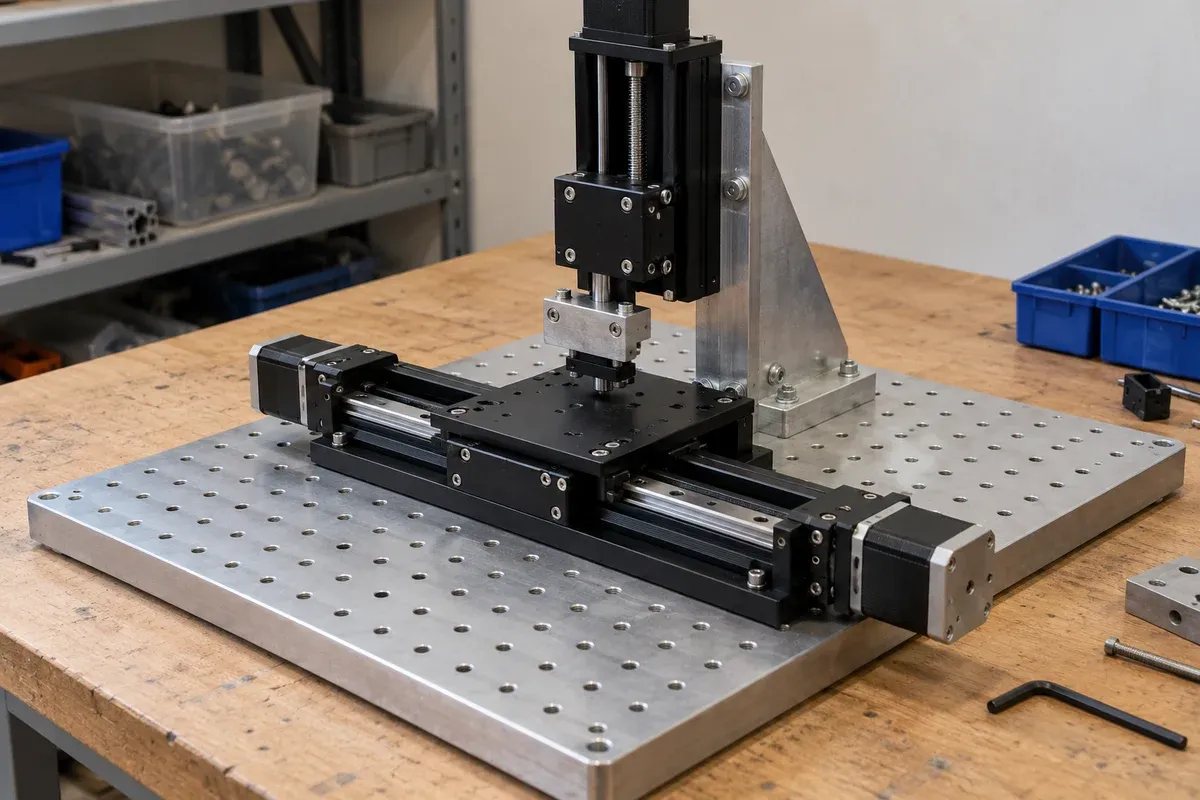
Choosing a vertical lift instead of mounting a linear stage vertically
Compare a dedicated vertical lift with a vertically mounted linear stage by checking layout, gravity loading, support and configuration-specific evidence.
Selection guide · 4 min read ·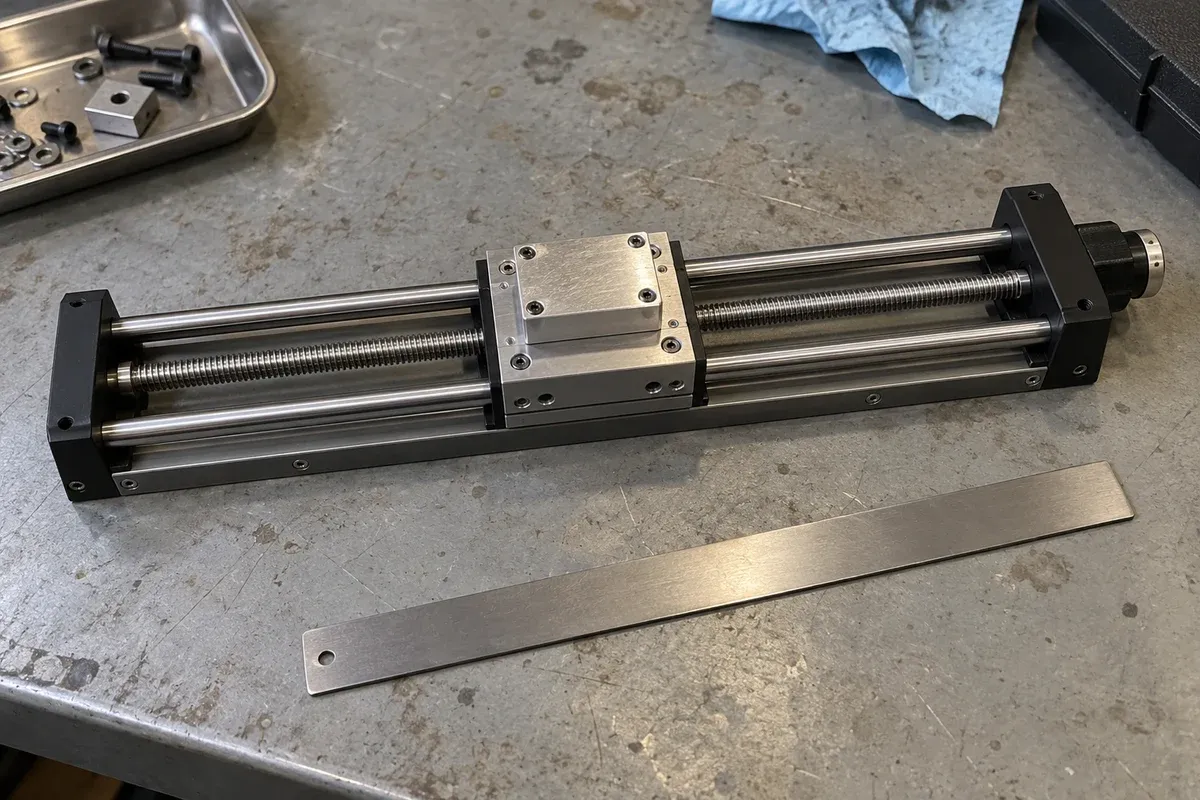
Stage Selection & Buying Guides
Choosing travel from the usable work envelope, approach and clearance
Calculate required stage travel from process positions, approach moves and service clearance, then check the complete moving envelope against the layout.
Selection guide · 4 min read ·From requirements to a quotation
Review your stage requirements
Share the motion envelope, payload, orientation and acceptance criteria. Request confirmation of the exact configuration before ordering.
Request a Quote