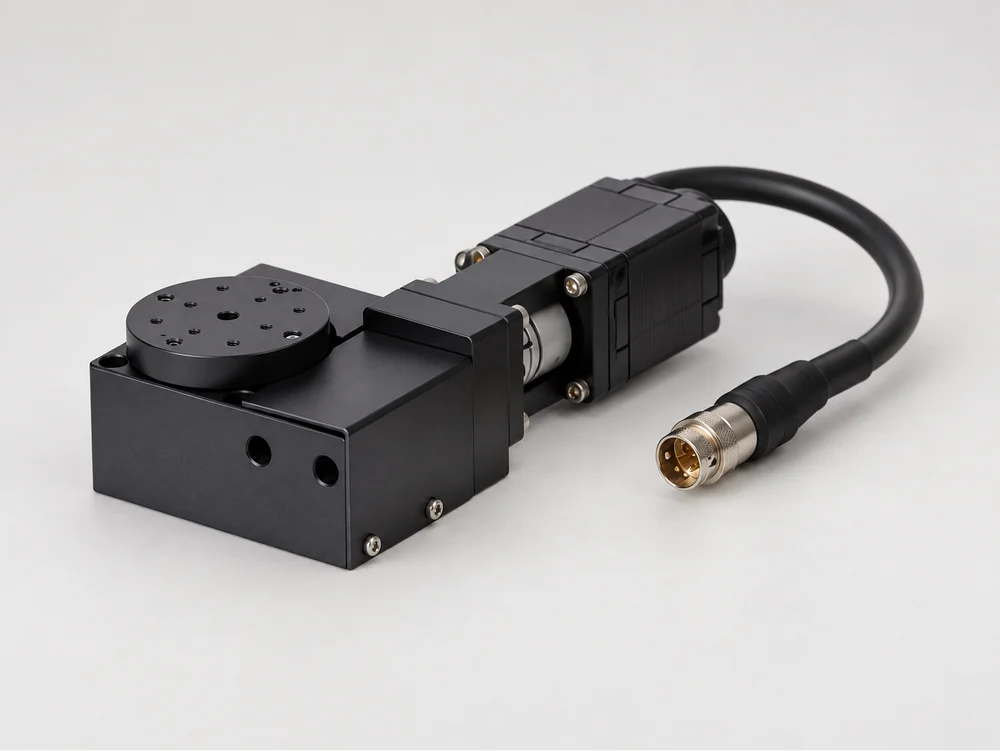
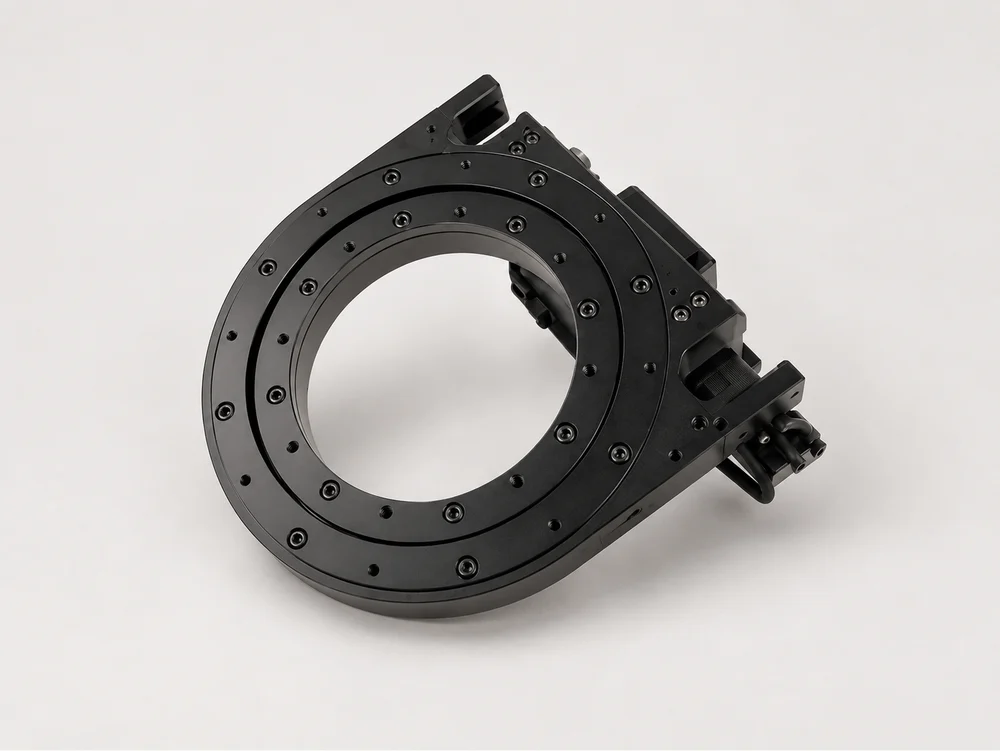
CYDRA40-17-28Rotary · Bearing · Stepper
- Range
- ± 8.5°
- Repeatability
- ± 0.002°
- Backlash
- ± 0.01°
- Centre load
- 4 kg
Home / Rotary Stages
Limited-arc ball-screw drive and continuous 360° worm gear, to ±0.002° repeatability.
Also called rotation stages, motorised rotation stages or rotary positioners — the same machines, under the names different suppliers print on them.
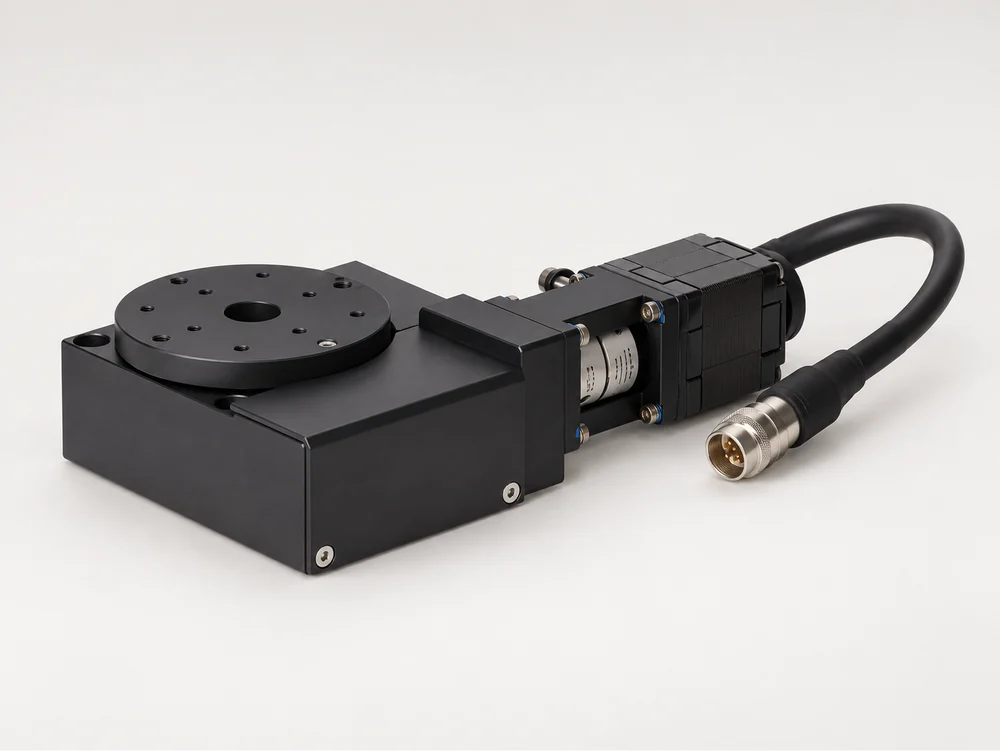
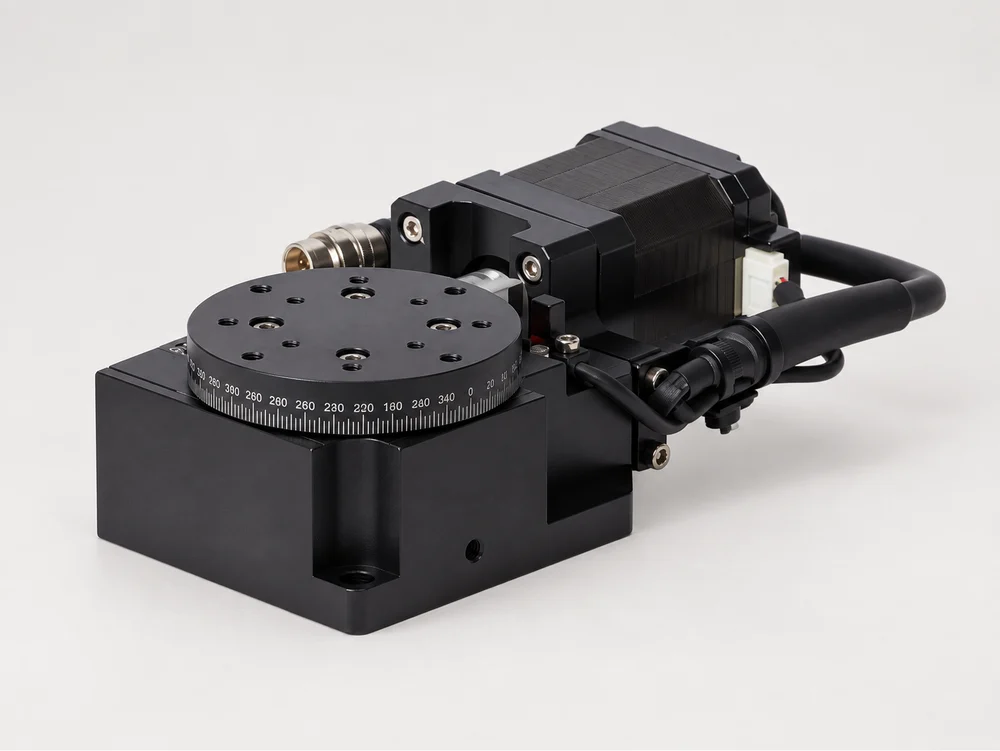
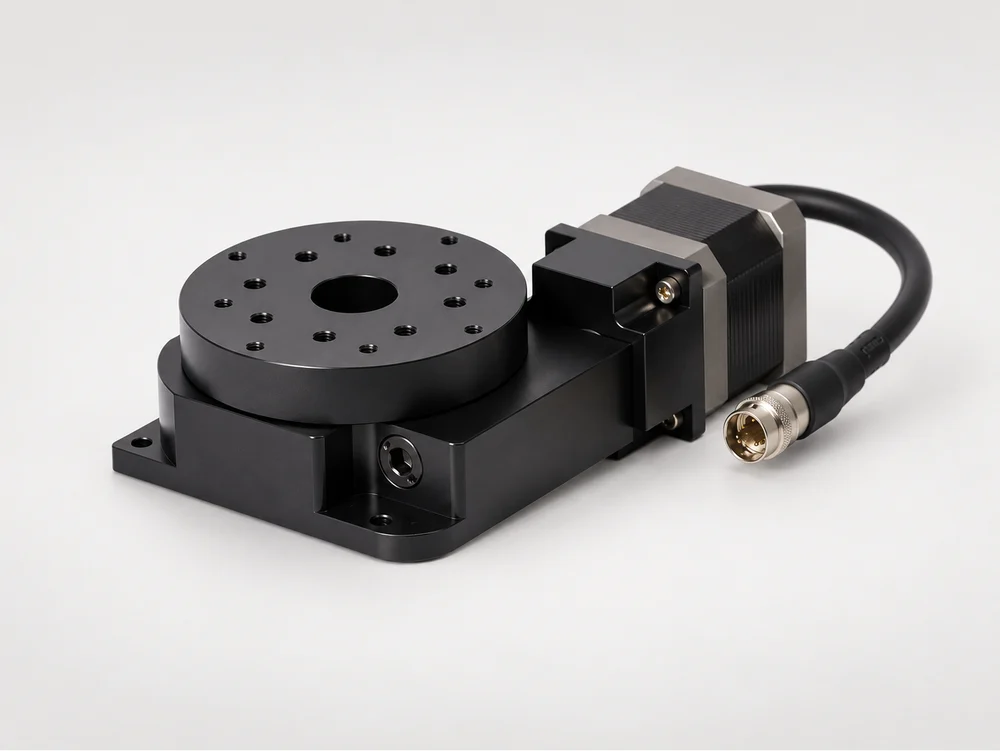
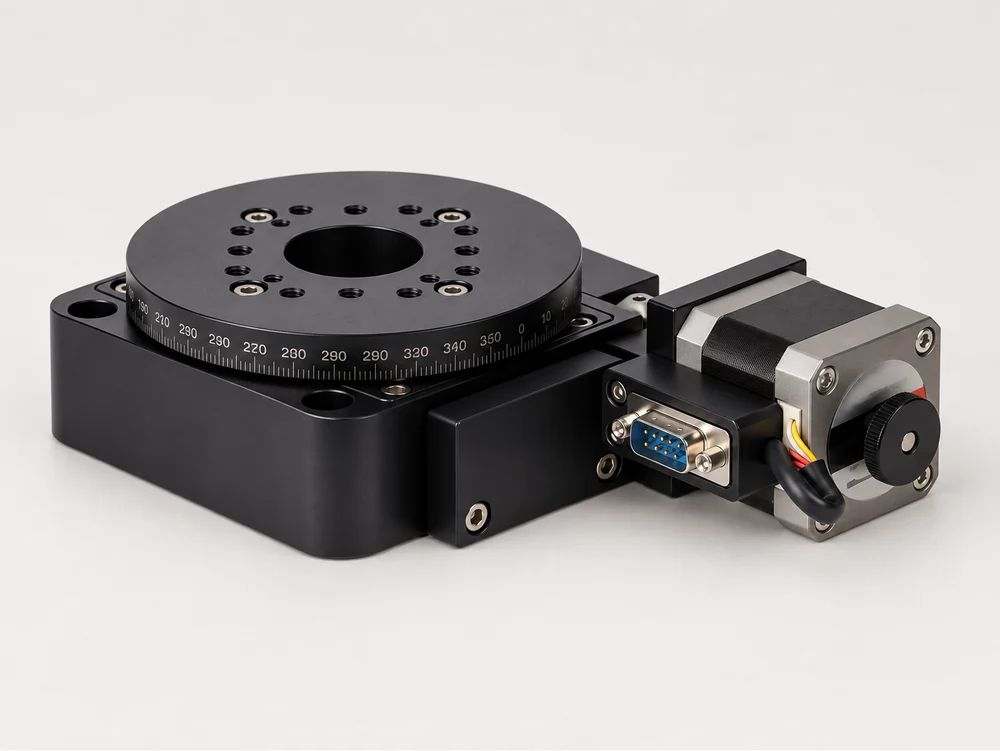
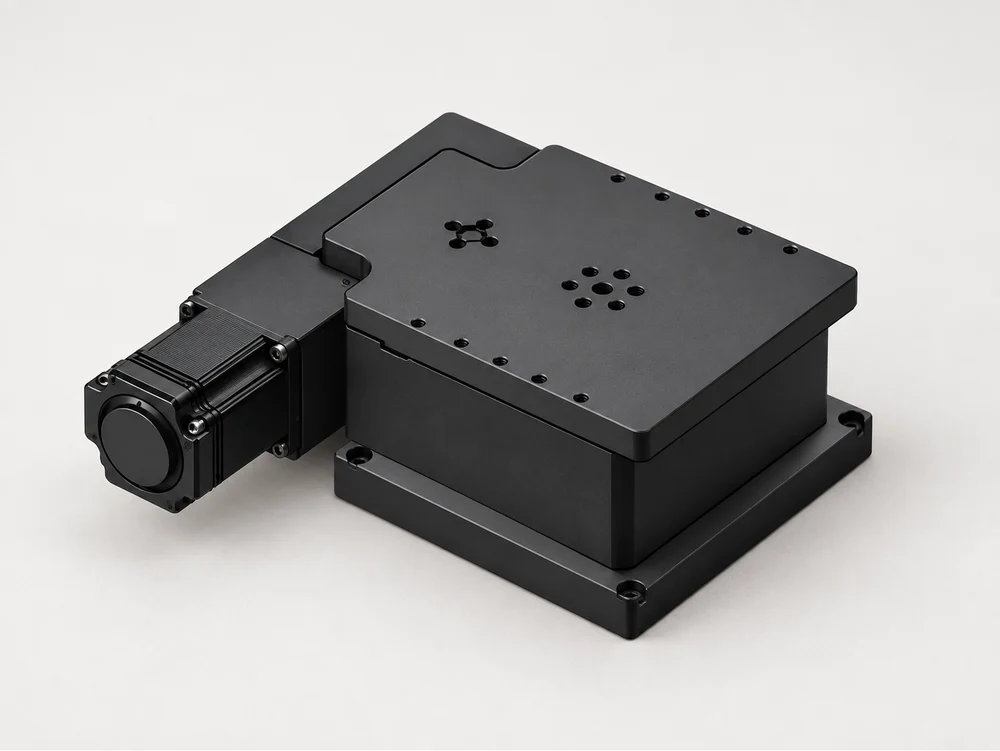
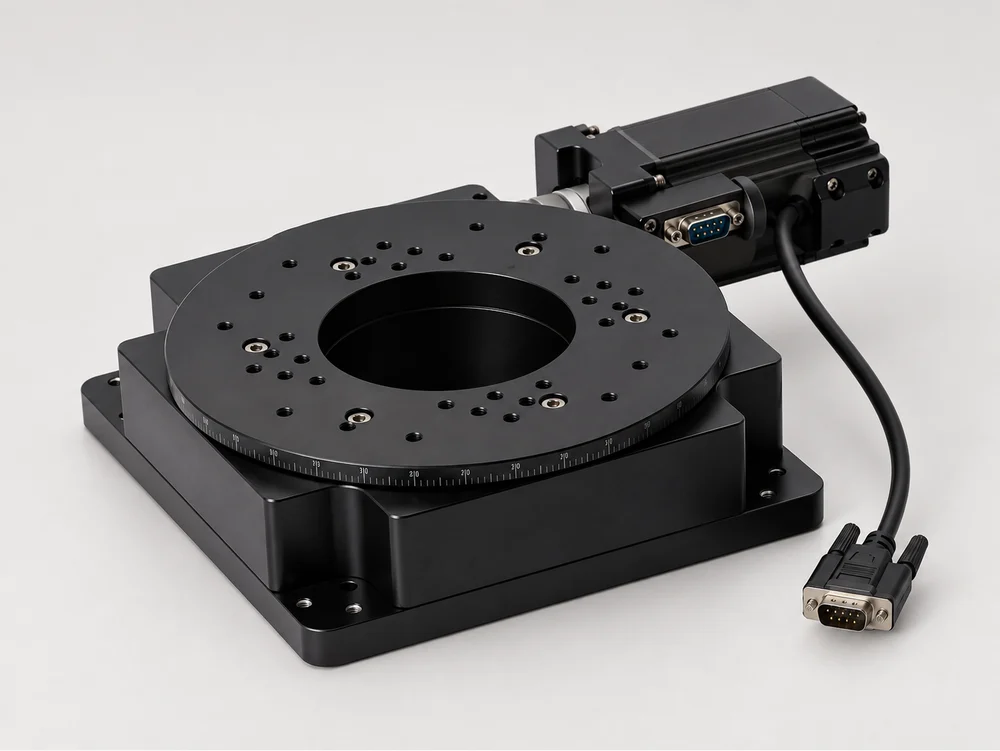
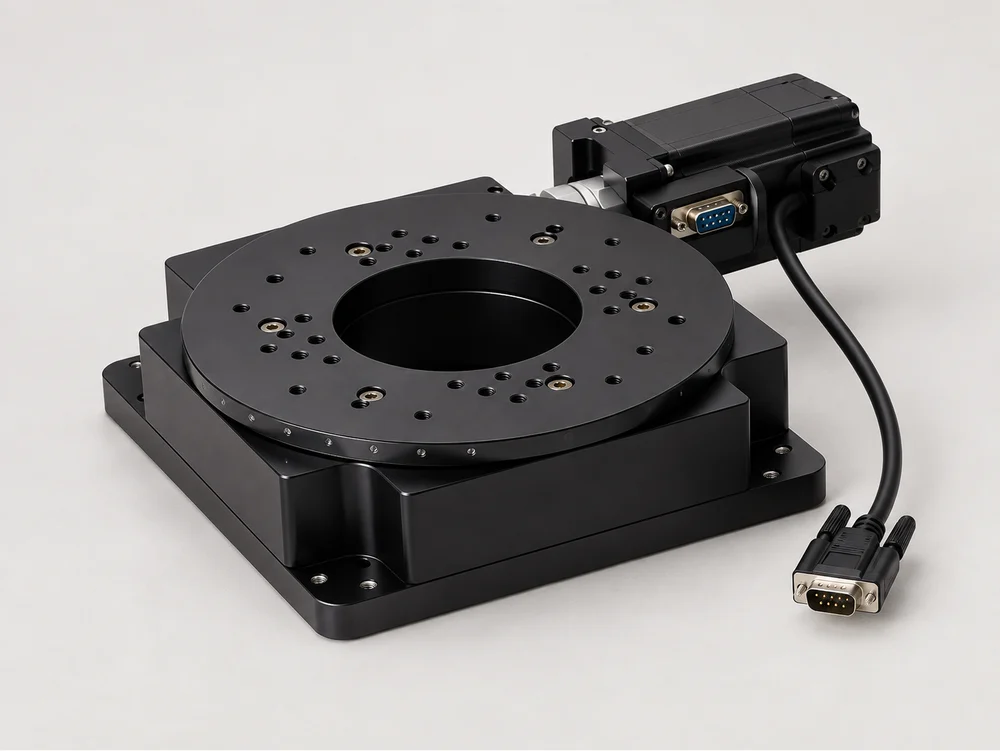
No. Both names describe a table that turns about its own axis, and suppliers use them interchangeably. This series covers both limited-arc and continuous 360° models.
Because of how it is driven. The limited-arc models in this series are ball-screw driven, which converts the screw's fine lead into small, stiff angular steps over a restricted range — useful for alignment where you never need a full turn. The 360° models use a worm gear instead, which trades the screw's stiffness for continuous rotation and self-locking. The range of every model is published, so the choice is visible before you quote.
Accuracy is how close the table gets to the angle you commanded, over the whole range. Repeatability is how closely it returns to an angle it has already visited. Backlash is the lost motion when you reverse direction. They are three different numbers and quoting the tightest as if it were the loosest is the commonest specification error in this category — how each figure on this site is established is set out in full on the specifications page.
How far the axis of rotation itself wanders as the table turns, published in millimetres. It is the figure that decides whether a part mounted off-centre stays where you put it through a rotation, and it is routinely left out of comparisons because it is harder to explain than accuracy.
Every figure on these pages is marked with where it comes from: the supplied published catalogue, a value normalised from that source, or a field absent from the source. Nothing is filled in with a zero.