Key takeaways
- A typical value is not automatically a bound for an individual delivered unit.
- Retain source wording and statistical basis beside normalized units.
- Resolve unclear claims in the quotation before writing an acceptance rule.
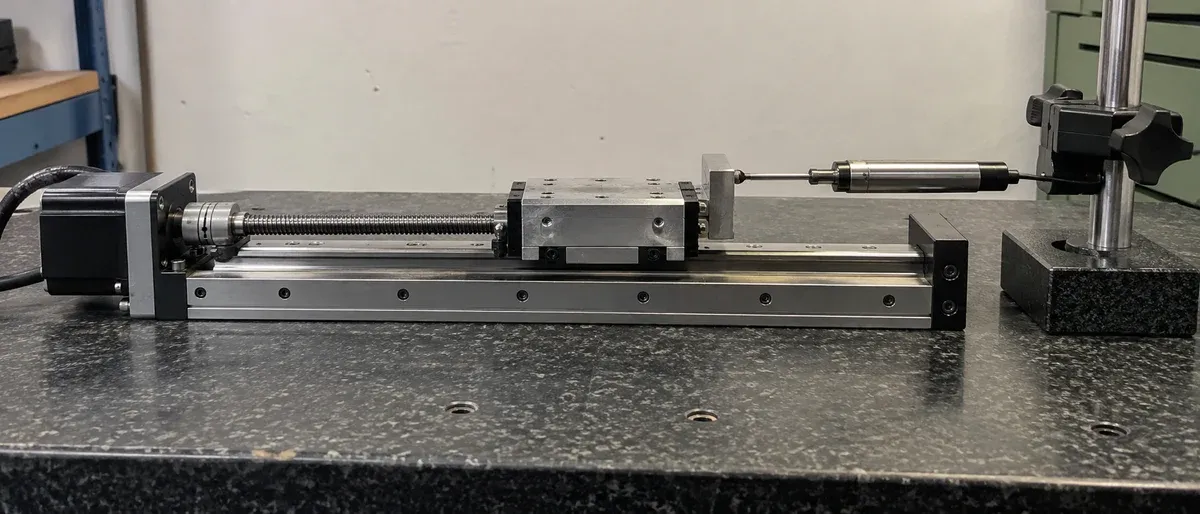
Compare the evidence before ranking the values
A purchasing spreadsheet often compresses a datasheet into one number per candidate. That is risky when one number describes a population’s typical behavior and another describes a supplier’s committed limit. The useful comparison is between evidence packages: claim, basis, conditions and the document that will govern delivery.
Newport’s terminology and standards page describes separate typical and guaranteed categories for its products. Treat that as the company’s explanation of its own terminology. It does not establish an industry-wide contract, and it does not assign either label to the products in this catalogue.
Make a source-preserving comparison sheet
Start each candidate’s entry with exact model, configuration and source revision. Add separate fields for the original parameter name, original value, unit and wording that qualifies the number. Then create a normalized-value field only where the conversion is justified. This lets the engineer inspect the transformation rather than trusting a polished summary.
Include fields for typical, guaranteed, minimum, maximum, measured-on-this-unit or unspecified. Use the source’s actual category; do not force every document into a category it never claims. Add the statistic and span convention. A plus-or-minus interval, peak-to-peak span and standard deviation can share a unit while answering different questions.
Keep travel normalization independent from performance comparisons. A travel entry of ±10 mm corresponds to 20 mm total; this arithmetic says nothing about positioning error within that span. The site’s specification-basis guide explains how catalogue and derived entries are labeled. Use that distinction rather than silently presenting a conversion as an original supplier statement.
Separate selection evidence from acceptance evidence
For early shortlisting, a well-labeled typical result may help identify candidates worth discussing. For acceptance, ask what evidence will accompany the delivered configuration and what requirement the supplier agrees to meet. A family-level graph, a demonstration trace and a serial-number-specific report are different artifacts. Record which one is available without assigning it more authority than it has.
Add a “comparison blocked by” field. It might say direction basis missing, controller different, payload unspecified, compensation unclear or uncertainty not stated. This field is more useful than a misleading rank because it tells the buyer exactly what to ask next. Do not calculate a percentage advantage while those material differences remain unresolved.
The acceptance sheet should also identify who will test, when, and how a disputed result will be handled. Agree the decision rule before delivery. A result close to a bound cannot be interpreted responsibly by ignoring measurement uncertainty; NIST’s reporting guidance explains why the expression of uncertainty must be clear.
Hypothetical example: two plausible quotations
Imagine Candidate A lists a typical return-position figure, while Candidate B offers a committed bound under a stated test procedure. Both may be viable, but the smaller printed value is not enough to choose between them. This is a hypothetical purchasing scenario, with no actual products or numerical promises attached.
The buyer asks A for its delivery acceptance basis and asks B whether its test configuration matches the intended payload and approach sequence. The comparison remains open until those responses arrive. If A later supplies a unit-specific report, the spreadsheet retains the original typical claim and adds the report as another evidence type instead of rewriting history.
Practical checklist for a defensible comparison
- Preserve the source wording, revision and exact configuration.
- Label typical, committed and unit-measured evidence separately.
- Check direction, compensation state, travel coverage and measurement location.
- Keep accuracy, repeatability and command resolution in different rows.
- Normalize units only after documenting their original meaning.
- Flag missing conditions instead of treating them as favorable assumptions.
- Link the final purchasing requirement to the agreed quotation or test plan.
Use the existing comparison section as a starting point for examining basis mismatches, then obtain current documentation for an actual purchase. The final output should make uncertainty and unanswered questions visible. A transparent “not yet comparable” is a better engineering conclusion than a precise-looking ranking built from unlike claims.
Questions
Does guaranteed always mean every operating condition?
No. Check the exact scope, configuration, test conditions and contractual wording. Do not expand a claim beyond those boundaries.
Can typical values help shortlisting?
Yes, as contextual evidence when labeled clearly. They should not replace a required delivery-unit acceptance bound.
What if a datasheet gives only one number?
Ask for its meaning, statistic and conditions. Keep the basis unresolved until a reliable source answers those questions.
Sources & scope
Sources support the specific points described below. General engineering guidance and third-party examples do not establish a catalogue model's performance or suitability.
- Newport: Motion Basics Terminology and Standards
Newport describes its own typical and guaranteed specification categories differently.
Accessed - NIST TN 1297: Reporting Uncertainty
Reported uncertainty needs an explicit basis.
Accessed
Related engineering resources
Continue reading
Accuracy & Metrology
Accuracy, repeatability and resolution: three separate acceptance questions
Turn accuracy, repeatability and resolution into separate acceptance requirements, with a worksheet for evidence, conditions and decisions.
Verification guide · 4 min read ·Accuracy & Metrology
Assessing velocity stability and following error during a scan
Plan scan-motion measurements with explicit trajectory definitions, acquisition bandwidth, payload and processing for velocity and following error.
Verification guide · 4 min read ·From requirements to a quotation
Review your stage requirements
Share the motion envelope, payload, orientation and acceptance criteria. Request confirmation of the exact configuration before ordering.
Request a Quote