Key takeaways
- The commanded position is not automatically the reference truth.
- Vary one documented factor at a time or use an explicit experimental design.
- Retain pose, target and environmental context with each sensor observation.
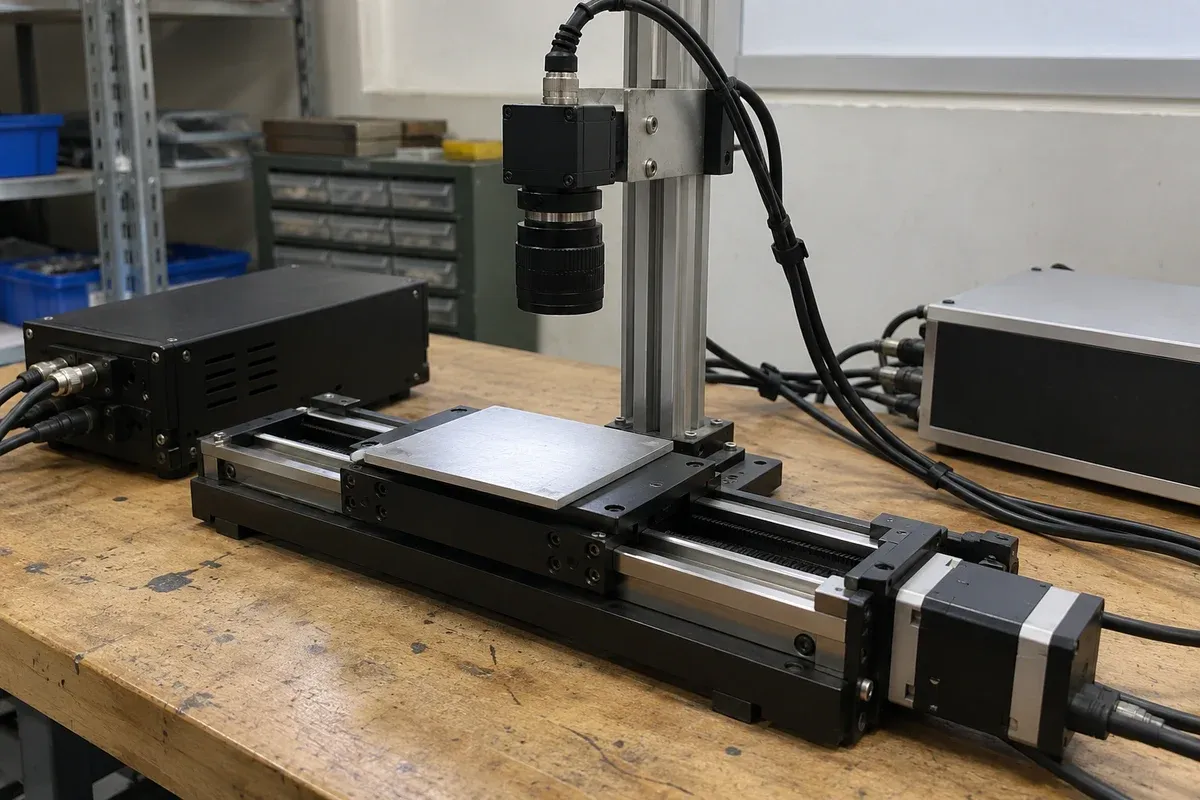
A sensor-characterization experiment places a known or controlled target in different conditions and records the sensor’s response. Motion hardware helps create those conditions, but it does not automatically establish their true values. The experiment must distinguish a requested pose, evidence about the actual pose and the sensor reading being evaluated.
This is a conceptual requirements method. It does not claim a calibrated measurement system, a certified sensor test or suitability of a catalogue stage for a regulated application.
State the question and reference quantity
Begin with the property being investigated. Is the question response versus distance, sensitivity to angle, consistency after repeated presentation or something else? Write one observable outcome for each question.
KEYENCE’s sensor-selection reference emphasizes matching measurement methods to applications. For this experiment, document the selected principle and target conditions rather than treating all sensors as interchangeable.
Identify what establishes the reference quantity. If the test compares sensor output with a stage command, describe it as a comparison with commanded position unless independent evidence supports a stronger claim. A controller display should not silently become a traceable reference standard.
Build a pose-and-condition matrix
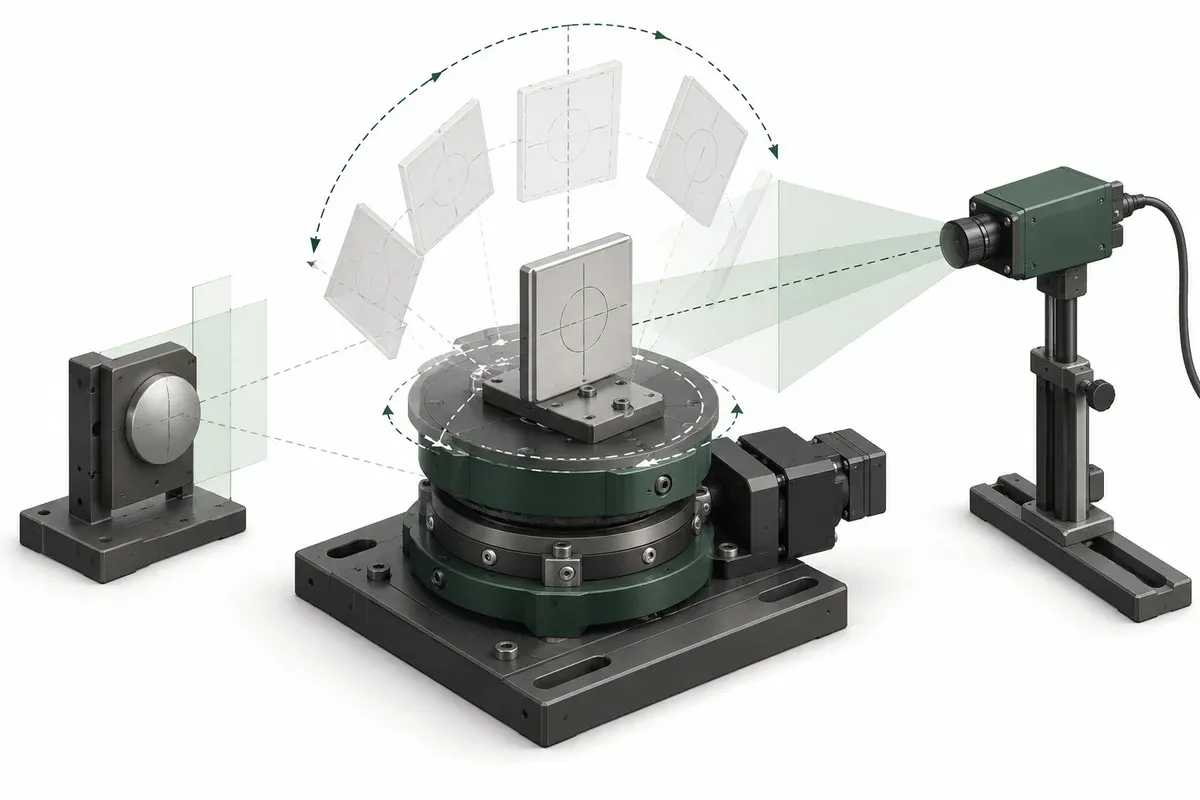
List the positions and orientations to be evaluated. Add target identity, surface condition, fixture configuration and other variables the experiment owner considers relevant. Distinguish intentionally varied factors from conditions intended to remain constant.
Decide whether each trial includes removing and reinstalling the target. Repeated observations without reloading investigate a different question from repeated presentations with a new seating operation. Both may be useful, but they should not be combined under one unexplained repeatability label.
If the plan varies more than one factor, make that design explicit. Otherwise, a change in distance and angle together could leave the team unable to determine which produced a changed response.
Plan observation order and reference checks
Select an order that supports the question being asked. Returning periodically to a reference condition can help reveal a change during the run. A reversed or rearranged sequence may be useful for investigating order effects, but should be justified rather than treated as a universal rule.
Define the sensor-ready indication, acquisition period and valid-reading criteria with the instrument owner. Retain the identity of the target condition with the measurement. A record containing only a row number is fragile if a move or reading is retried.
Include environmental observations that are necessary to interpret the result. Do not claim that temperature or another influence was controlled unless it was actually measured or constrained by the experiment.
Practical characterization checklist
- Write the sensor property and the intended scope of the conclusion.
- Identify the reference quantity and evidence supporting its value.
- List poses, target conditions and fixed configuration details.
- State whether unloading and reloading occur between observations.
- Define ordering, repeats and any return-to-reference checks.
- Record measurement validity and pose evidence with every observation.
- Specify the analysis and uncertainty review required before claiming calibration.
Have the measurement owner review the plan before a supplier is asked to select a stage. The resulting motion requirements may be modest in one direction and demanding in another, depending on how strongly that direction affects the sensor response.
Hypothetical example: distance and tilt change together
Suppose a proposed test moves a target farther from a sensor using a holder that also changes its angle. The initial plot labels the horizontal axis “distance,” but the test has varied two conditions together. A smooth response curve cannot establish that distance alone caused the change.
The revised plan either constrains the angle or records it as an explicit experimental factor. It also defines what evidence establishes the actual distance. This hypothetical example reports no sensor performance and assumes no catalogue-stage accuracy.
Bound the resulting conclusion
A useful report states which target, poses, sequence and reference method were used, including unresolved limitations. Use the stage selector to compare mechanical candidates only after that plan exists. A successful characterization trial can inform later requirements, but its conclusions should not extend to materials, mounting orientations or environments that were not evaluated.
Record the sensor configuration revision as well as its identity, because a changed measurement mode can alter the meaning of an otherwise identical observation.
Questions
Can the stage coordinate be used as calibration truth?
Only when its relevant position evidence and uncertainty are adequate and documented for the calibration claim.
Should every sensor test use a random position order?
No universal order is best. Choose an order appropriate to the drift and sequence effects being investigated, and record it.
Does testing one target characterize all materials?
No. Conclusions must remain bounded by the targets and conditions actually evaluated.
Sources & scope
Sources support the specific points described below. General engineering guidance and third-party examples do not establish a catalogue model's performance or suitability.
- KEYENCE: Selecting a Measurement Sensor
Primary sensor-selection reference supports specifying measurement principle, target and application conditions separately from positioning hardware.
Accessed
Related engineering resources
Continue reading
Applications & System Design
Building a positioning brief for an optical-power search experiment
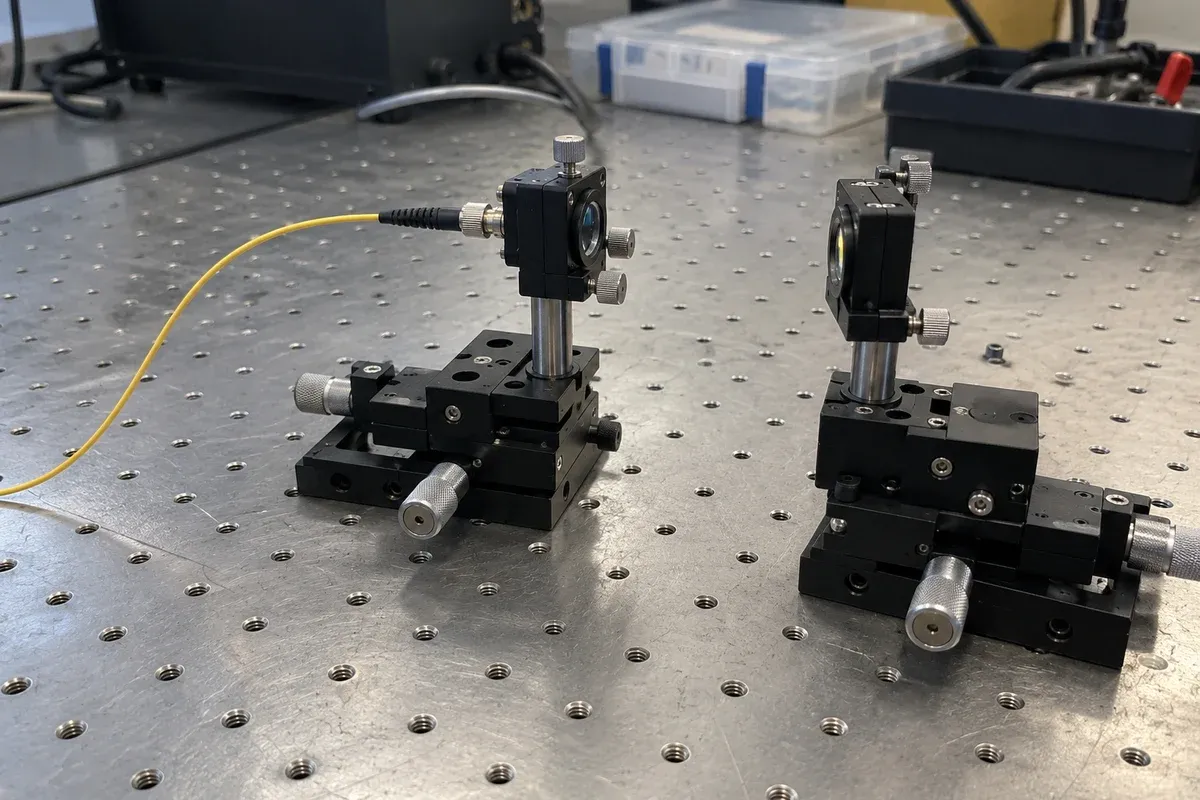
Define a bounded optical-power search experiment with measurement validity, pose association and stop criteria before specifying motion hardware.
Application guide · 4 min read ·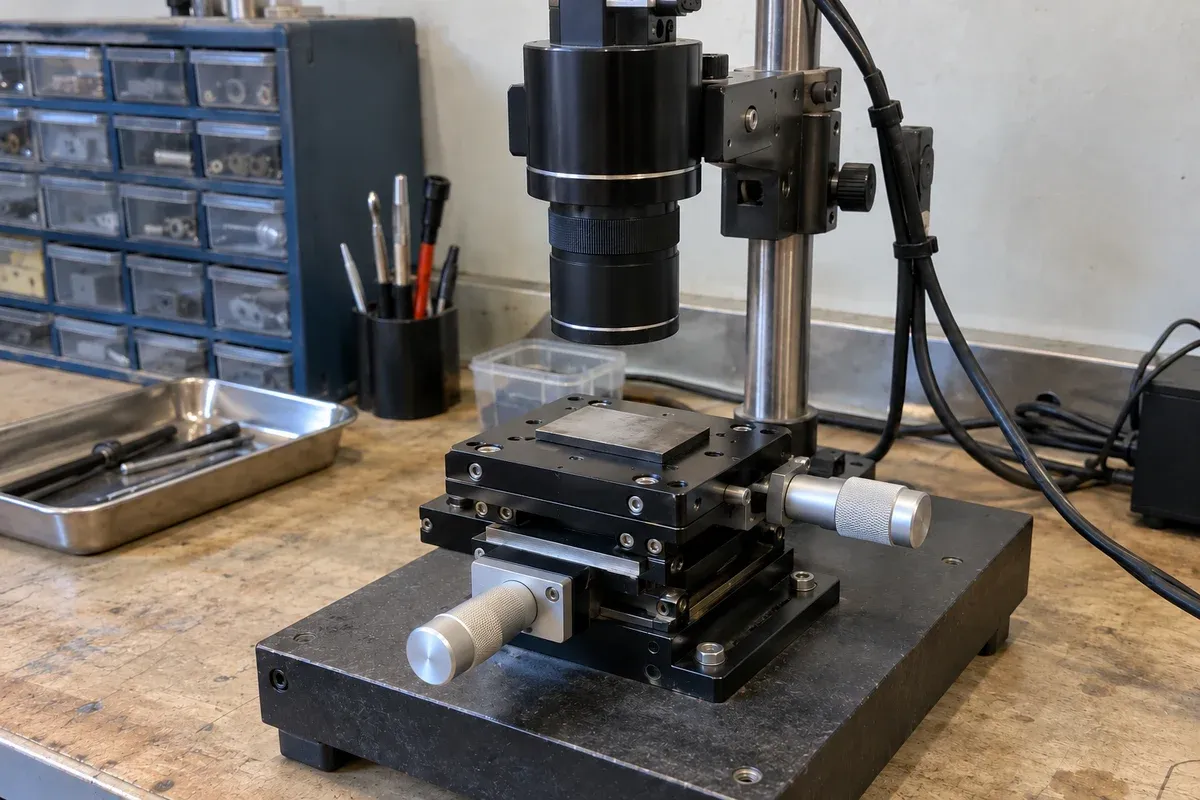
Applications & System Design
Field-of-view calculator and calibration for stage motion
Use the field-of-view calculator for camera and microscope coverage, check calibration and turn the usable field into a stage-motion brief.
Application guide · 8 min read ·From requirements to a quotation
Review your stage requirements
Share the motion envelope, payload, orientation and acceptance criteria. Request confirmation of the exact configuration before ordering.
Request a Quote