Key takeaways
- A handover needs a configuration baseline and named document owners.
- Separate established requirements from assumptions and pending decisions.
- Link changes to the checks and approvals they may invalidate.
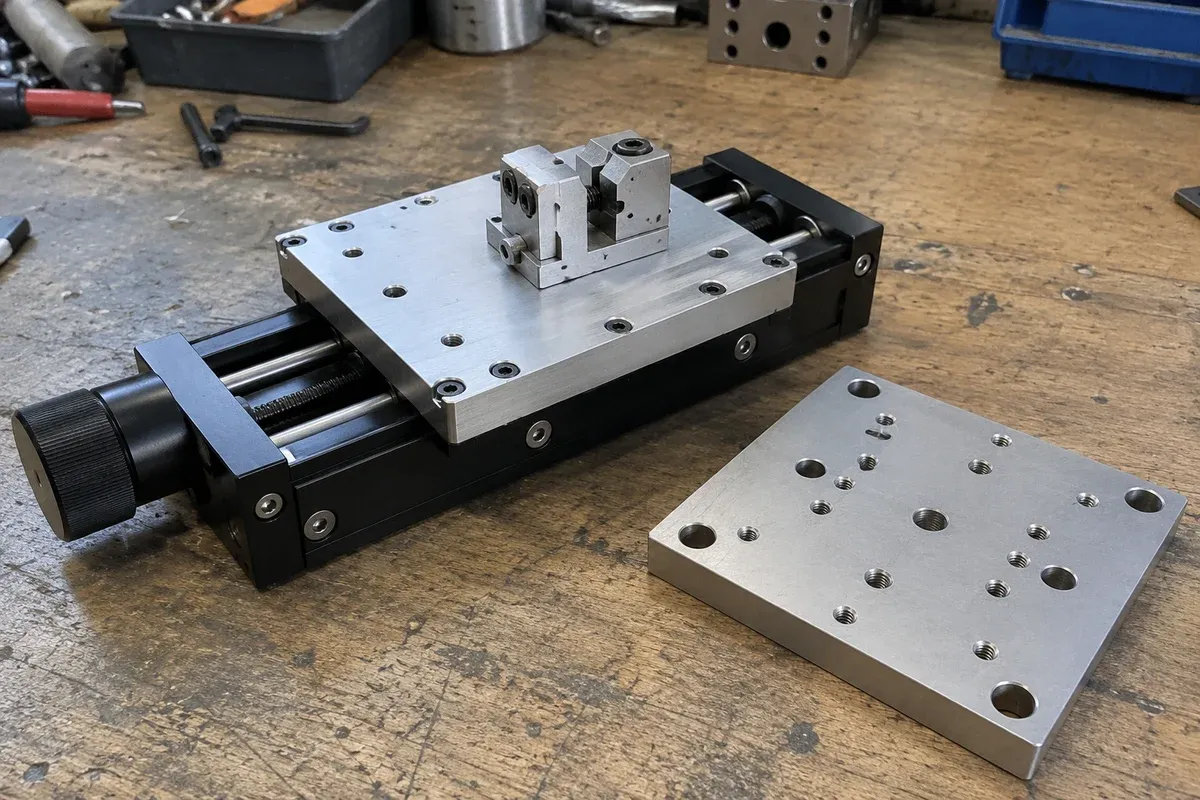
An assembly handover should let a qualified person understand what is being built, what has been established and what remains unresolved. A collection of CAD files and supplier brochures rarely achieves that on its own. Organize the package around the actual configuration and the decisions needed to install, verify, maintain and change it.
Establish one configuration baseline
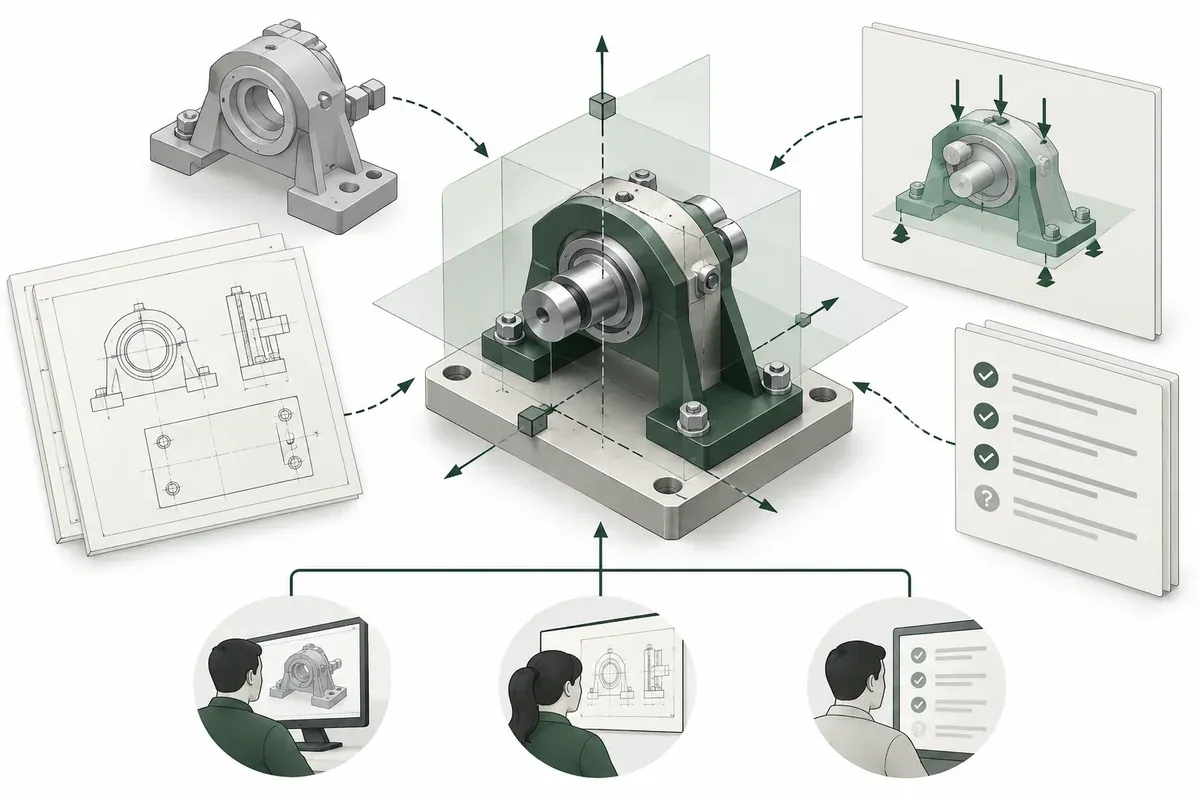
Create an index naming the assembly revision, stage models, adapters, holders and relevant accessories. Link each item to its released drawing or verified supplier document. Distinguish the intended configuration from earlier concepts and clearly identify any provisional components.
Include an assembly view with orientation, component identifiers and the functional point of interest. If the fixture supports multiple workpiece or tooling variants, list them and identify which documents apply to each. A package should not rely on someone remembering which of several similarly named models was eventually chosen.
Record the status of the package itself. A review draft with open loading questions is different from an installation-ready release. Making that distinction visible prevents an unfinished design from acquiring authority merely because its files look polished.
Connect geometry to coordinates and loading
Include the mechanical datum scheme, positive axis directions and the relationships between home, software zero and the working origin. Use a consistent assembly viewpoint. This allows mechanical, controls and inspection teams to discuss the same location without silently switching references.
Add the carried-component inventory and payload-location information used in the design review. Record operating orientation, relevant axis positions and external process forces considered. If an assessment depends on a particular holder or motion profile, make that condition explicit.
The multi-axis accuracy guide distinguishes component behavior from assembled relationships. In a handover, the corresponding documentation principle is to keep component specifications separate from evidence about the complete functional point. A stack of individual datasheets is not an assembled acceptance report.
Keep limits and procedures traceable
For each stated limit or installation requirement, identify its source and applicable configuration. Use the approved documentation for fasteners, mounting conditions and handling. Do not turn an email assumption into a numerical instruction without review.
Include the reviewed travel and service envelopes, connector information and access provisions. Where the complete machine needs safety-related procedures or controls, identify the responsible documentation and owner rather than inventing instructions within a general assembly note.
Maintain an open-item register. Each entry should state the unanswered question, the work it affects, the person responsible and the evidence needed to close it. This makes uncertainty actionable. It is more useful than a broad disclaimer saying that everything must be checked later.
Handover-package checklist
- Configuration index with current models and document revisions.
- Assembly views showing orientation and the functional point.
- Interface drawings and the mechanical datum scheme.
- Coordinate conventions linked to the mechanical references.
- Carried masses, payload locations and reviewed operating conditions.
- Applicable installation documents and limit sources.
- Clearance, service-routing and maintenance-access records.
- Verification results separated from planned tests and open questions.
- Change-control ownership and required reassessment triggers.
Keep records findable through the index rather than assuming folder names communicate their status. If a document is superseded, ensure the package no longer points to it as the governing version.
Include a compact revision history that explains consequential changes, not merely file dates. A new holder, altered service route or changed reference convention should be easy to find because it may affect earlier loading, clearance or verification decisions.
Hypothetical example: transferring a prototype fixture
Suppose a prototype moves from its original designer to an integration team. The CAD model shows the correct stage stack, but the loading enquiry used an older holder and the controls notes define a different X direction. Both discrepancies are easy to miss when the files arrive without an index.
The handover review establishes a single configuration, updates the load description and reconciles coordinate definitions. Pending verification remains visibly pending. This fictional example does not imply any particular assembly has passed review; it illustrates how a structured package prevents assumptions from becoming installation instructions.
Use the quotation enquiry to resolve product-specific open items, attaching the relevant configuration information through the agreed enquiry process. The handover becomes useful when each statement can be connected to a source, a decision or a clearly assigned next step.
Questions
Is a CAD assembly enough for handover?
No. It may omit installation requirements, coordinate conventions, loading assumptions, verification records and unresolved decisions.
Should unknown limits be left blank?
No. Mark them unresolved, assign an owner and state what evidence is needed before the dependent work proceeds.
Can component specifications serve as system acceptance results?
No. Keep supplier specifications distinct from measured evidence for the complete assembled fixture.
Sources & scope
Sources support the specific points described below. General engineering guidance and third-party examples do not establish a catalogue model's performance or suitability.
- Zaber multi-axis accuracy guide
Supports the narrow general principles that reference frames, assembly alignment and tool-point offsets matter; no system performance is inferred.
Accessed
Related engineering resources
Continue reading
Mounting & Mechanical Integration
Checking the support surface before installing a precision stage
Organize a support-surface readiness review around documented requirements, contact geometry, surface condition and traceable inspection evidence.
Integration guide · 4 min read ·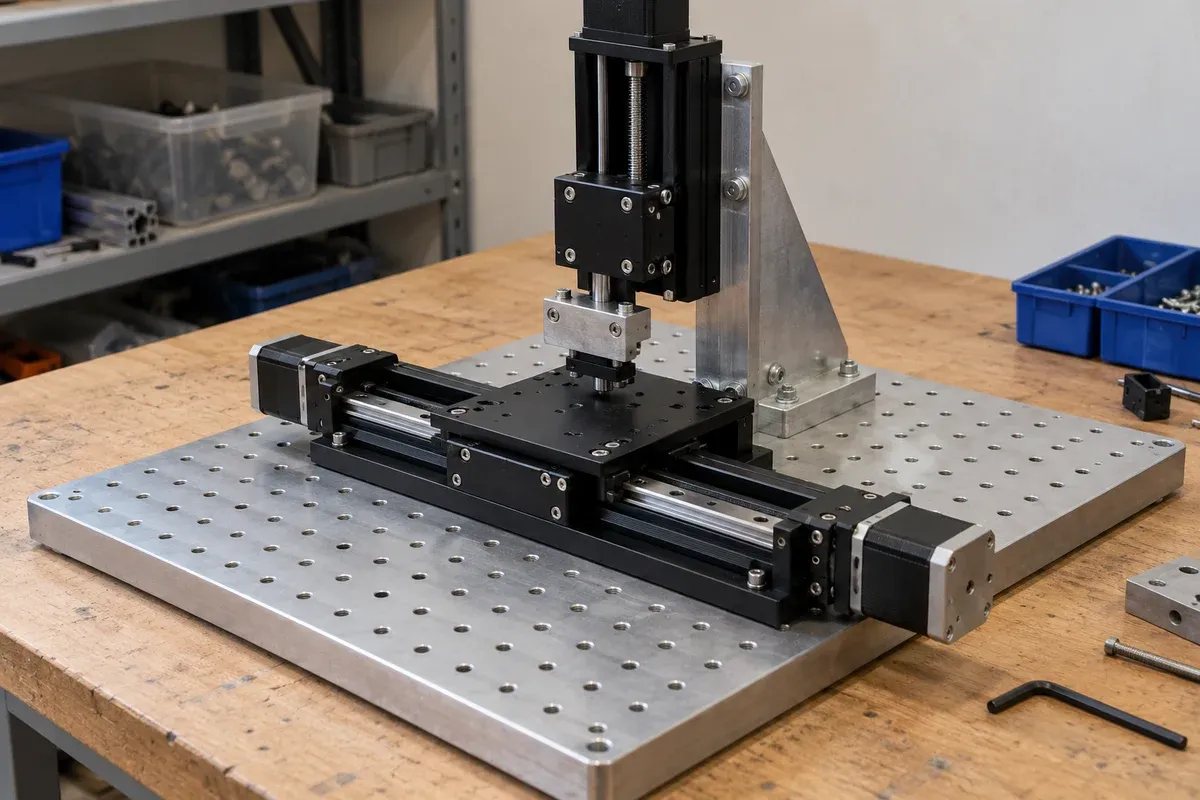
Mounting & Mechanical Integration
Choosing the order of an XYZ stack
Compare XYZ stack arrangements through moving mass, payload offsets, working height and access before selecting a mechanical layout.
Integration guide · 4 min read ·From requirements to a quotation
Review your stage requirements
Share the motion envelope, payload, orientation and acceptance criteria. Request confirmation of the exact configuration before ordering.
Request a Quote